Grief & Healing among Interspecies Families
Promoting Conservation Whole-Family Cemeteries
Fostering Green Burials in Pet Cemeteries
Creating Wildlife Preserves as Conservation Cemeteries
Mission
Our mission is threefold:
- To support bereaved families by promoting earth-friendly options for the disposition of a loved one’s remains.
- To reconnect with Nature in life and death.
- To explore personal and cultural experiences of death and mourning within interspecies families.
The Green Pet-Burial Society is a program of Family Spirals®.
Vision
Some may balk at spending money to bury a dog’s or cat’s remains in a cemetery, yet the choices made in times are of mourning are deeply personal and private.
The Green Pet-Burial Society addresses the lack of options for ‘natural’ or ‘green’ burials within Pet Cemeteries as well as some Whole-Family Cemeteries. We also recognize that our pets are family, and seek to foster ways to keep families together in death as in life. Our several Projects foster, promote, and protect green burial, whole-family options.
For more information on the ‘human-animal bond’ and bereavement for a beloved pet visit our Resources webpage.
Why Pet Cemeteries?
When a pet dies, most people choose to cremate the body. Home burial is another common choice. Since 1896 – with the first pet burial in the U.S. at (what would become) the Hartsdale Pet Cemetery – burial in a pet cemetery has been another option, especially for city dwellers. There are several reasons why one would choose a cemetery burial for a pet’s remains.
For landowners:
- Local ordinance might prohibit home burial.
- People may prefer to not bury at home since they might sell their land and thereby lose access to their pet’s grave (with additional concern about future land use).
- Cemeteries seem to be a (more) permanent option that can comfort a mourner.
For those who don’t own land:
- Burying one’s pet’s remains in a human cemetery in the family plot might be prohibited by cemetery policy and/or by state cemetery law.
- The idea of burial in public lands is most likely prohibited (and poses a variety of concerns).
- Burial in a pet cemetery may seem like a viable option – yet overall, pet cemeteries are under-regulated, often favor underground entombment rather than a natural burial, and few are deeded in perpetuity.
Cemetery Interment Practices
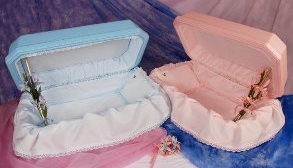
1. Mausoleum (above-ground entombment)
2. Underground entombment
- styrene plastic caskets
- metal caskets
- metal containers / ‘vaults’
3. Earth burial
- wood caskets – ranging from those with nails, toxic glues, stains, and lacquer, plywood, and polyester liners, to solid pine caskets with tongue and groove construction and nontoxic glues
- other eco-friendly containers made from sustainable materials
- shrouds or blankets (including those that are eco-friendly)
One’s choice may be based on a variety of criteria – religious beliefs, other cultural beliefs, cost, aesthetics, and/or environmental concerns. Attitudes about the decomposition of the body may also be chief factor. If a body is entombed above or below ground, decomposition still occurs – but in isolation. Some regard earth burial as An earth burial is the only option that allows the body to reconnect with and nourish the earth. Unlike entombment, it’s regarded as a cleansing and wholesome ritual that fulfills a widely-held view based on Genesis 3:19
In the sweat of thy face shalt thou eat bread, till thou return unto the ground; for out of it wast thou taken; for dust thou art, and unto dust shalt thou return.
Over the years, burials at pet cemeteries have become more socially accepted as they model themselves, in large part, on human cemeteries and attend to maintenance, landscaping, and supportive services. We assume that they’d cater to diverse burial preferences, yet preference for a natural burial is rarely satisfied. While some cemeteries allow for untreated wood caskets – or no casket – one’s pet may still be interred in an underground mix of plastic and metal containers with toxic chemicals applied to the surface.
The Need for Permanent Status
The name ‘cemetery’ or ‘memorial park’ imply that pet cemeteries are similarly regulated as human cemeteries; THEY ARE NOT. Most pet cemeteries in the USA and internationally are privately held and have NO legal permanent status.
History holds many incidents of pet cemetery owners selling their cemetery land to developers. This often entails attempting to contact ‘pet owners’ before their pet’s remains are disinterred so that they can be reclaimed, otherwise the remains may be put into a mass grave. The whole notion of a green burial coincides with preserving the land in perpetuity, i.e., acquiring permanent legal status.
Learn of our Proposed Standards for Green Burial Grounds.
Legal Status
The Green Pet-Burial Society is hosted by Family Spirals®, a sponsored project of Fractured Atlas, a non-profit arts service organization. Contributions for the charitable purposes of Family Spirals® must be made payable to “Fractured Atlas” only and are tax-deductible to the extent permitted by law.
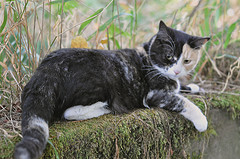
Cemetery Cat Photo Credit: Chrissy Gombos
last updated November 20, 2020
 Green Pet-Burial Society